An experience and operational perspective from Philip Hardtstock, Head of LVV Manufacturing, Miltenyi Bioindustry, Teterow, Germany
With over a decade of experience in lentiviral vector (LVV) manufacturing, my focus has been on building and scaling GMP-compliant production – from hands-on downstream processing to leading full manufacturing operations.
Today, this includes end-to-end responsibility for LVV production using transient transfection of HEK293T suspension cells at scales up to 200 L. This progression reflects a broader industry shift: from early-stage process establishment to increasingly structured, scalable manufacturing platforms.
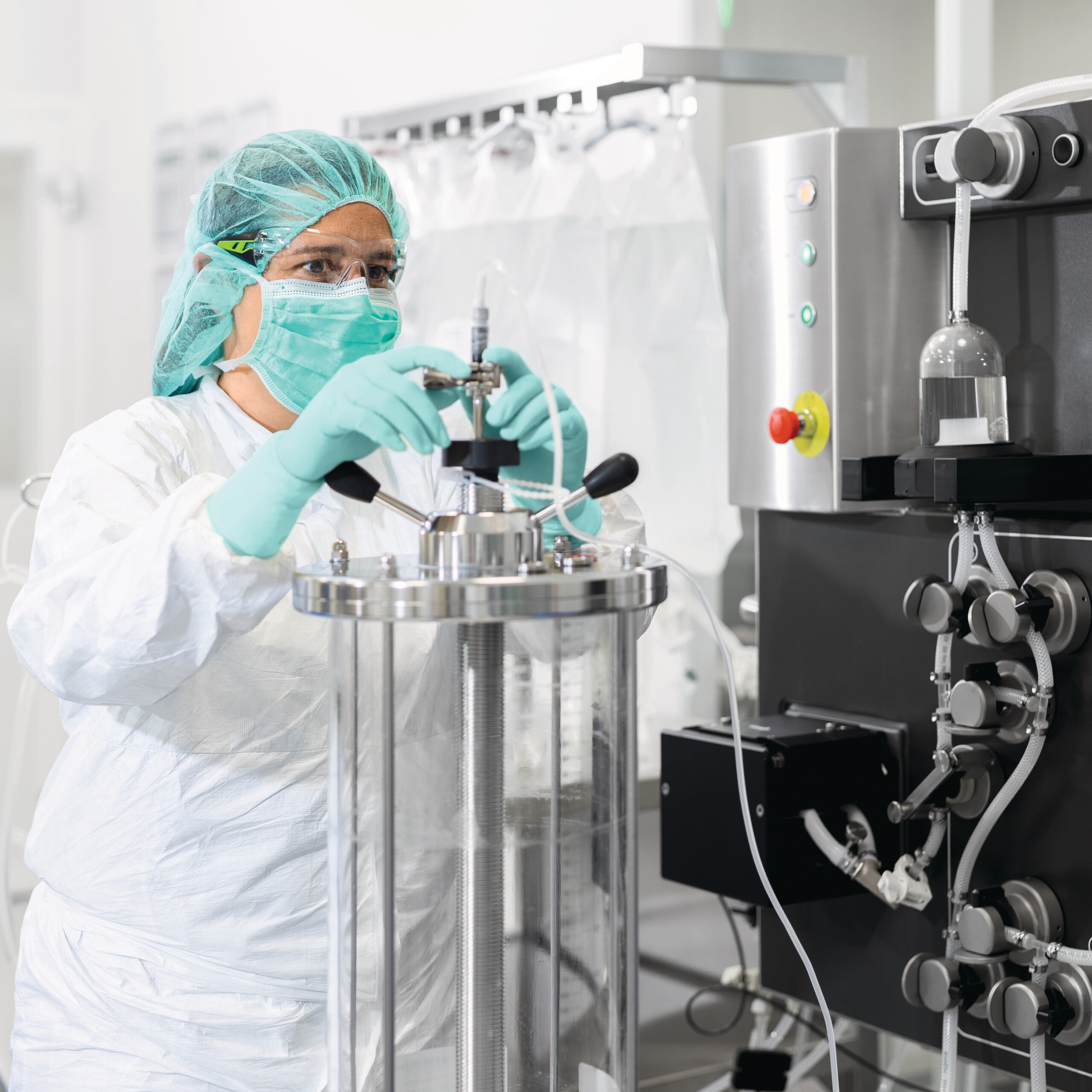
Lentiviral vectors are a foundational technology in cell and gene therapy. They enable stable genetic modification of immune cells, making approaches such as CAR-T therapies viable at clinical scale.
Their ability to drive durable gene expression underpins therapeutic efficacy – and, in many cases, defines whether a treatment approach is feasible at all. As such, LVVs are not just a component of the process; they are a critical determinant of therapeutic success.
A key limitation remains the availability of optimized pseudotypes. Expanding this toolbox will be essential to unlock broader applicability across cell types and next-generation modalities.
One of the most significant advances in recent years is the shift toward platform-based LVV manufacturing.
Increased process standardization – combined with accumulated manufacturing experience – has led to:
At the same time, right-sizing manufacturing scale is becoming a strategic consideration. Traditional scales (50–200 L) often exceed demand in early clinical phases, creating inefficiencies.
Smaller-scale GMP production (e.g., ~20 L) is emerging as a more aligned model for phase I programs – enabling:
A consistent lesson across programs is the time and depth of work required to reach clinical and commercial readiness.
Beyond manufacturing, success depends on:
What may begin as a straightforward therapeutic concept evolves into a highly complex, multidisciplinary effort. Recognizing and planning for this early is critical to avoid delays and de-risk development pathways.
Two developments are likely to shape the next phase of LVV innovation:
Together, these trends signal a shift from LVVs as a supporting technology to a central driver of next-generation therapeutic strategies.
For decision-makers, the implication is clear:
LVV manufacturing is no longer just a technical challenge – it is a strategic lever.
Success will depend on aligning:
early in the lifecycle.
Those who do so effectively will be best positioned to accelerate timelines, control costs, and translate innovation into clinical and commercial success.

Philip Hardtstock is head of manufacturing for viral vector production at Miltenyi Bioindustry, Teterow, Germany, leading GMP manufacturing of lentiviral vectors. He brings more than a decade of experience in LVV manufacturing, spanning process development, scale-up, and GMP operations, as well as project leadership for external customer programs. His work focuses on advancing robust, platform-based manufacturing approaches to enable efficient clinical translation and commercialization of cell and gene therapies.