Interview with Thekla Kurz, Global Head, Miltenyi Bioindustry, Bergisch Gladbach, Germany
The cell and gene therapy (CGT) market is facing significant headwinds: limited funding is putting pressure on biotech companies and CDMOs, regulatory requirements are becoming more stringent, and scalability challenges remain a hurdle for individualized therapies. In this environment, experience and reliability are critical. In the interview, we discuss why proven technology is critical, how supply chain independence creates advantages for customers, and why choosing the right CDMO partner separates accelerated success from costly delays.
“A CDMO plays a crucial role in the development of assets in the field by manufacturing cell therapy products under strict GMP standards. These standards are essential for clinical studies, ensuring quality and safety for materials used in humans. Many companies, from startups to large pharma, rely on CDMOs to accelerate development and manage costs, especially when speed is critical in early-stage development. We’ve optimized our processes so that clinical material can be delivered in as little as seven months, making us a highly competitive partner in the industry.”
“We stand out because, together with Miltenyi Biotec, we own and develop our own technology, offering customers not only current solutions but also future innovations. Our continuous development in digitalization and automation provides significant advantages, especially for larger customers. Our clients benefit from being part of ongoing technological improvements, and the close integration between our CDMO and biotech divisions ensures access to the latest advancements.”
“Well, they're absolutely crucial. They are the basis of everything. Without abiding by these standards, you can't manufacture in today’s CGT business. All our sites have manufacturing authorizations and are regularly inspected by the FDA and customers. The recent successful pre-approval inspection at our Gaithersburg (Maryland, US) site marked a breakthrough, enabling commercial vector supply. We’re preparing for further FDA inspections to expand our commercial capabilities, underscoring the importance of compliance in maintaining trust and operational excellence.”
“We provide strong support for customers in regulatory filings and documentation through a dedicated regulatory team. We can help our customers with all the different steps they have to take from start to finish. Our extensive experience from our own clinical development allows us to guide customers through the expectations of regulators, including potency assays, compatibility testing, and so on. This hands-on support helps customers navigate the complex regulatory landscape with confidence.”
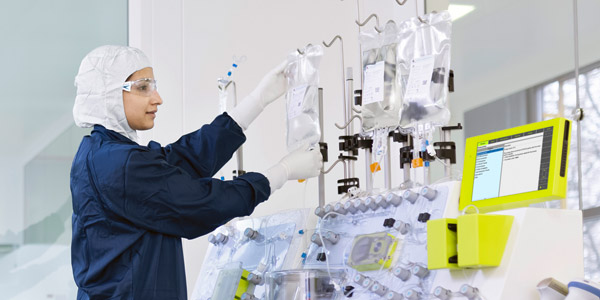
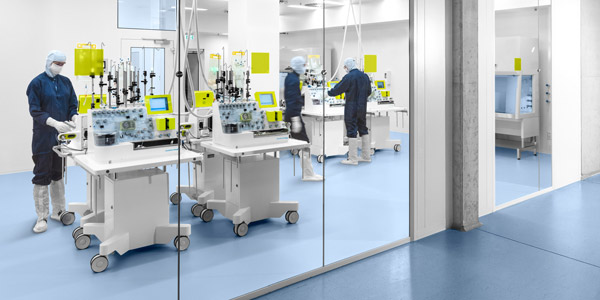
“Manufacturing capacity and scalability are addressed through our sophisticated platforms, particularly the CliniMACS Prodigy® Platform. Most CGT products are autologous, requiring individualized manufacturing for each patient. So, traditionally, you had to manufacture in a Class A or B cleanroom. With the Prodigy, we have a very closed system where usually Class C is sufficient, maybe even Class D. The Prodigy platform enables automated, flexible scaling by simply adding more units to the room as needed. This is called "the ballroom concept" because basically a large room is provided, and then the CliniMACS Prodigy Instruments can come in and dance.”
“Our supply chain is solid, but what really sets us apart is raw material management. We produce all critical raw materials internally, which minimizes supply risks and makes us highly reliable. We’re vertically integrated – manufacturing cells, vectors, media, and disposables ourselves, and we’ve built strong contingency with multiple sites.
Since COVID, supply reliability is a big concern, and unlike competitors dependent on imports, we avoid geopolitical risks. Plus, we have on-site service teams and spare equipment, so we can react immediately and prevent downtime. These factors make us a safe and dependable partner.”
“We have development teams across different sites to support process development, even for complex assets. Our approach is highly integrated – we hold weekly meetings with R&D, services, and Bioindustry to address customer questions and design solutions. If a customer’s asset is at an early stage, we can even provide R&D support.
What makes us unique is our openness and scientific mindset. When challenges arise, our teams treat them as opportunities to innovate, not obstacles. We also leverage our internal research experts, who are deeply connected to cutting-edge science and conferences, giving us capabilities that competitors simply can’t match.”
“Having an experienced partner like us is vital because it ensures reliable planning and helps avoid costly delays. In the pharmaceutical business, tradition and caution are paramount, and companies look for partners they can trust for the long term. If a partner lacks experience, there is a risk of taking wrong turns, which can lead to delays and increased costs. Trust and consistency are essential, as switching CDMOs is a lengthy and expensive process, making experience a true game changer for customers.”
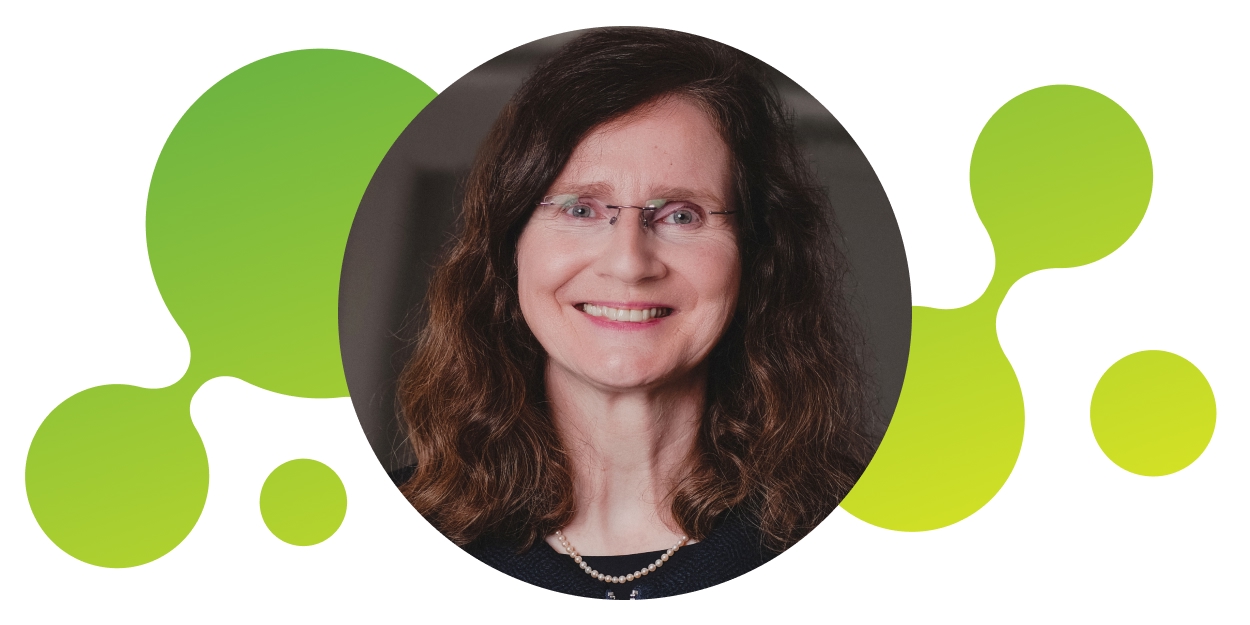
Thekla Kurz has been Global Head of Miltenyi Bioindustry for 2.5 years. A pharmacist by training, Thekla brings over 30 years of experience in biotech and biopharma, including 23 years at Merck. Before joining Miltenyi Bioindustry, Thekla managed two sites in Germany for a veterinary health company during the COVID period.